

Many adults step onto the scale daily, hoping to see a particular number that signifies health or progress. This habit often leads to frustration and a skewed perception of well-being, especially when that number refuses to budge or even increases despite diligent efforts. It’s a common pitfall to let a single digit dictate our fitness journey and self-worth.
At Forward Thinking Fitness, we understand that your health is far more complex than a numerical readout. Focusing solely on total body weight can be incredibly misleading, obscuring vital truths about your physical transformation and overall health status. There’s a much more insightful way to track your progress and understand your body.
Beyond the Scale: Why Weight Can Be Misleading for Your Health
The common obsession with a single number
The bathroom scale has long been the primary arbiter of weight management, creating a societal obsession with a singular number. For decades, traditional health metrics have reinforced the idea that a lower weight automatically equates to better health. This widespread belief often leads individuals, particularly busy adults in the Lehigh Valley, to chase arbitrary weight targets, sometimes resorting to unsustainable diets or excessive cardio. However, this focus overlooks the complex interplay of elements that truly define a healthy physique. We often see clients become disheartened when the scale doesn’t move, even as their clothes fit better or their strength improves.
How the scale hides crucial internal changes
What the scale fails to tell you is the composition of that weight. When you embark on a fitness journey, especially one involving strength training, your body undergoes significant internal remodeling. You might be simultaneously losing fat and building muscle. Since muscle tissue is denser than fat tissue, you could be dropping inches and body fat percentage while your total weight remains stagnant or even increases slightly. This phenomenon is a prime example of how the scale can mask genuine progress, leaving you feeling frustrated rather than empowered by your transformative efforts.
Understanding ‘skinny fat’ and its implications
One of the most concerning outcomes of relying solely on weight is the “skinny fat” phenomenon. This describes individuals who appear thin on the outside but carry a disproportionately high percentage of body fat and low muscle mass. Despite a seemingly healthy weight, these individuals face similar metabolic risks to those categorized as overweight or obese, including an increased risk of type 2 diabetes, heart disease, and other chronic conditions. Understanding your body composition is vital to avoid this deceptive state and ensure your internal health aligns with your external appearance, a crucial aspect of overall well-being and metabolic health.

What Exactly Is Body Composition? More Than Just Fat
Defining muscle mass, fat mass, bone density, and water
Body composition analysis moves beyond the simple weight number to dissect your body into its fundamental components. It precisely measures your muscle mass, which includes skeletal muscles, smooth muscles, and the water contained within them; fat mass, encompassing both essential fat necessary for bodily functions and storage fat; bone density, indicating the mineral content of your bones; and body water, which is critical for nearly every bodily process. Together, these elements provide a holistic picture of your physical makeup, far more informative than a general weight measurement.
Why each component plays a unique role in your overall well-being
Each component of body composition holds distinct importance for your health. Adequate muscle mass is essential for strength, mobility, and a robust metabolism. A healthy range of fat mass is vital for hormone production, insulation, and energy storage, but excessive fat, particularly visceral fat around organs, poses significant health risks. Strong bone density is crucial for preventing osteoporosis and fractures, especially as we age. Lastly, maintaining proper hydration through sufficient body water supports everything from nutrient transport to temperature regulation. Understanding these roles helps you appreciate the interconnectedness of your health.
The difference between total weight and body composition
The crucial distinction between total weight and body composition lies in specificity. Total weight is merely the sum of all tissues in your body, offering no insight into their proportions. Body composition, however, quantifies these proportions, revealing the actual makeup of your weight. For instance, two individuals could weigh 180 pounds, but one might have a high muscle-to-fat ratio, indicative of athleticism and good metabolic health, while the other might have a low muscle-to-fat ratio, suggesting higher health risks. This deeper insight allows for truly personalized and
Enhancing strength, mobility, and preventing injury
Beyond metabolic benefits, strong muscles are fundamental to your physical capabilities. They provide the strength needed for everyday tasks, from lifting groceries to climbing stairs, and are crucial for maintaining good posture. Enhanced muscle mass also directly correlates with improved mobility and balance, significantly reducing the risk of falls and injuries that can become more prevalent with age. Developing core strength and robust supporting muscles around joints is key to preserving your functional independence and enjoying an active lifestyle for years to come. Many clients in Macungie and Emmaus find that focused strength training truly enhances their
Unlock Your True Progress: Insights Only Body Composition Can Provide
Seeing real changes even when the scale doesn’t move
One of the most empowering aspects of tracking body composition is witnessing tangible progress even when the traditional scale remains unchanged. Imagine diligently exercising and eating well, yet your weight stays the same. Without body composition data, this could be incredibly demotivating. However, a body composition analysis might reveal you’ve lost 3 pounds of fat and gained 3 pounds of muscle. This indicates a significant and positive body recomposition, a clear sign of success that the scale alone would have completely missed. This insight provides the motivation and validation necessary to persist with your health goals, particularly for busy individuals who need every bit of encouragement.
Optimizing your fitness and nutrition strategies with precision
Body composition data offers invaluable precision for tailoring your fitness and nutrition plans. If your analysis shows low muscle mass, your personal trainer can focus on hypertrophy-based strength training. If your fat mass is high, your dietitian can fine-tune your caloric intake and macronutrient balance to promote fat loss while preserving muscle. This data-driven approach moves beyond generic advice, allowing us to create highly personalized strategies that are far more effective than one-size-fits-all programs. It ensures that every rep and every meal contributes directly to your specific objectives, optimizing your efforts for maximum return.
Setting personalized, sustainable goals beyond ‘losing X pounds’
Shifting your focus from total weight to body composition fundamentally changes how you set and pursue health goals. Instead of the often arbitrary and discouraging target of “losing X pounds,” you can aim for more meaningful and sustainable objectives, such as “reducing body fat percentage by 5%” or “increasing lean muscle mass by 4 pounds.” These goals are not only more specific and measurable but also promote a healthier relationship with your body, focusing on strength, health, and functionality rather than just size. This approach fosters long-term sustainability and intrinsic motivation, aligning perfectly with the philosophy at Forward Thinking Fitness in the Lehigh Valley.
Why Muscle Mass Matters Most for Adults (Especially as You Age)
Muscle mass isn’t merely for aesthetics or athletes; it’s a critical foundation for overall health, metabolic function, and long-term independence, becoming even more indispensable as we age. Beginning in our 30s, adults typically experience a gradual loss of muscle mass, a condition known as sarcopenia, which accelerates without intervention. Preserving and building muscle through resistance training and adequate nutrition helps mitigate this decline, bolstering your body’s ability to perform everyday tasks, maintain balance, and significantly reduce the risk of falls and fractures.
Beyond its functional benefits, muscle tissue is metabolically active, meaning it burns more calories at rest compared to fat tissue. This higher resting metabolic rate supports healthy weight management and helps regulate blood sugar levels, reducing the risk of conditions like type 2 diabetes. Prioritizing muscle health translates directly into a higher quality of life, allowing you to remain active, energetic, and self-reliant well into your golden years. This emphasis on strength and functional fitness is a cornerstone of the personal training programs offered by Forward Thinking Fitness, designed to help clients in the Lehigh Valley thrive at every stage of life.
Connecting Body Composition to Metabolic Health and Disease Prevention
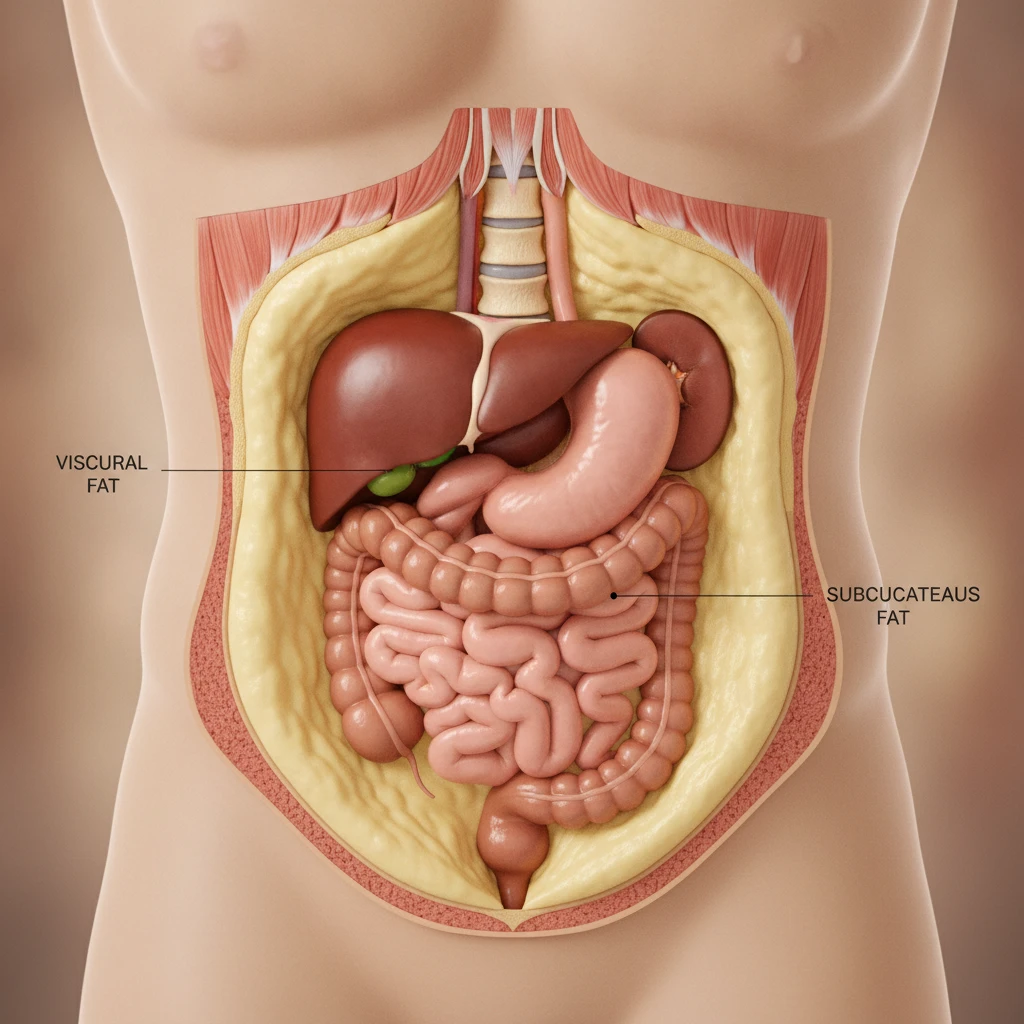
Understanding visceral fat vs. subcutaneous fat and their health impacts
When discussing body composition, it’s crucial to differentiate between types of fat. Subcutaneous fat is the visible fat located just beneath the skin. While excessive amounts can contribute to health issues, it is generally considered less metabolically active than visceral fat. Visceral fat, conversely, is stored deep within the abdominal cavity, surrounding vital organs like the liver, pancreas, and intestines. This type of fat is a significant concern because it actively releases inflammatory compounds and hormones that disrupt normal metabolic function. Even individuals who appear to be at a healthy weight on the scale can have dangerously high levels of visceral fat, a condition often termed “TOFI” (Thin Outside, Fat Inside).
Reducing risks for conditions like type 2 diabetes and heart disease
High levels of visceral fat are directly implicated in increasing the risk for serious chronic diseases. The inflammatory chemicals released by visceral fat can lead to insulin resistance, a precursor to type 2 diabetes. Furthermore, this internal fat contributes to higher blood pressure, elevated cholesterol levels, and systemic inflammation, all major risk factors for cardiovascular disease, including heart attacks and strokes. By actively working to reduce visceral fat and increase lean muscle mass through body recomposition, adults can significantly lower their predisposition to these life-altering conditions, fostering a stronger foundation for long-term health and vitality.
Improving insulin sensitivity and overall metabolic function
Improved body composition, particularly a reduction in visceral fat and an increase in skeletal muscle, plays a pivotal role in enhancing insulin sensitivity. Muscle tissue is a major site for glucose uptake, meaning that more muscle mass helps the body efficiently use blood sugar, reducing the strain on the pancreas and lowering blood glucose levels. This improved metabolic function means your body is better at processing nutrients, managing energy, and maintaining stable blood sugar. Through strategic strength training and a balanced, whole-food nutrition plan, adults can optimize their metabolic health, leading to greater energy, better body weight management, and robust physiological resilience.
Reliable Ways to Track Your Body Composition (and When to Use Each)
Comparing methods: DEXA, InBody, BIA, skin calipers, and girth measurements
Several methods exist for tracking body composition, each with varying levels of accuracy and accessibility. DEXA scans (Dual-energy X-ray Absorptiometry) are often considered the gold standard, providing detailed readings of bone mineral density, fat mass, and lean mass throughout the body. InBody scans, utilizing Bioelectrical Impedance Analysis (BIA) technology, offer a highly accurate, non-invasive method that measures segmental body composition, including muscle and fat distribution in each limb and the trunk. Basic BIA scales for home use are less precise, often influenced by hydration. Skin calipers, requiring a trained professional, measure subcutaneous fat thickness at various sites, while simple girth measurements (tape measure) track changes in circumference, useful for monitoring trends but not precise composition.
The benefits of professional-grade analysis (like InBody at FTF Strong)
For adults serious about understanding their health beyond the scale, professional-grade body composition analysis provides invaluable insights. At FTF Strong, our InBody analysis goes far beyond basic measurements, offering a comprehensive breakdown of your body’s fat, muscle, and water content. This detailed report includes your Basal Metabolic Rate (BMR), visceral fat level, and segmental lean analysis, showing exactly where you hold muscle and fat. Such precision empowers you to make informed decisions about your fitness and nutrition, providing a clearer picture than any home scale could offer. It’s a fundamental tool for truly personalized health management in Allentown, Bethlehem, and across the Lehigh Valley.
Why accuracy matters for truly personalized plans
The reliability of your body composition data directly impacts the effectiveness of your health and fitness strategy. Inaccurate measurements can lead to misinterpretations, causing you to focus on the wrong goals or implement ineffective training and nutrition interventions. For instance, if a home scale overestimates your body fat, you might unnecessarily restrict calories, potentially losing valuable muscle mass. Accurate data from professional tools like the InBody scanner provides a precise baseline and allows for specific, targeted adjustments to your program. This precision is essential for an experienced coach to develop a truly personalized plan that yields optimal results, ensuring your efforts are always aligned with your physiological reality and specific goals.
Turning Your Body Composition Data into Actionable Steps
How to interpret your results with an experienced coach
Receiving your body composition report is just the first step; interpreting the data effectively is where the real value lies. An experienced coach at FTF Strong can help you understand what your results truly mean for your health and goals. They’ll translate complex numbers into clear, actionable insights, identifying areas where you excel and those needing improvement. For example, if your visceral fat level is high, your coach can help you prioritize specific strategies. This partnership ensures that your efforts are guided by expertise, enabling you to build sustainable habits and achieve consistent progress, rather than making uninformed guesses about your body’s needs. A coach provides the accountability to keep you consistent with fitness goals.
Adjusting your strength training and cardio programs effectively
Your body composition data directly informs how your strength training and cardio programs should be structured. If the analysis reveals insufficient lean muscle mass, your coach might emphasize a progressive overload approach in your strength training to stimulate muscle growth. Conversely, if excess body fat is identified, especially visceral fat, the program might incorporate more consistent cardio alongside resistance training to optimize fat loss while preserving muscle. For adults seeking a personal trainer in Lehigh Valley, this data-driven approach ensures that every exercise and every session contributes purposefully to your body recomposition objectives, making your workouts more efficient and effective. The aim is always to create a balanced plan that addresses your unique physiological profile.
Fine-tuning your nutrition for optimal body recomposition goals
Nutrition is a cornerstone of body recomposition, and your body composition data provides critical guidance for fine-tuning your dietary intake. An experienced coach or dietitian can help you adjust your macronutrient ratios—protein, carbohydrates, and fats—to support your specific goals. For muscle gain and preservation, adequate protein intake is paramount. If fat loss is the priority, a moderate caloric deficit, coupled with nutrient-dense foods, will be recommended. Understanding your Basal Metabolic Rate (BMR) from an InBody scan allows for precise calorie targets. This personalized nutritional strategy, often overseen by a professional, empowers you to fuel your body optimally for change, ensuring you’re making smart food choices that align with your body’s needs and support overall metabolic health, as recommended by organizations like the World Health Organization.
Your Personalized Body Composition Journey in the Lehigh Valley
How FTF Strong supports your health and fitness goals
At FTF Strong, we are dedicated to helping adults in the Lehigh Valley achieve their health and fitness aspirations through a comprehensive and personalized approach. We understand that your journey is unique, which is why we offer more than just workouts. From initial body composition analysis using state-of-the-art InBody technology to expert coaching, tailored nutrition guidance, and effective strength training, our services are designed to provide a holistic pathway to better health. Whether your goal is to lose weight, build strength, improve mobility, or manage a chronic condition, our team is here to support you every step of the way in Allentown, Bethlehem, Emmaus, and beyond.
Combining body composition analysis with expert coaching, nutrition, and training
The true power of body composition analysis emerges when it is integrated into a broader health and fitness strategy. At FTF Strong, your InBody results aren’t just numbers; they form the foundation of a dynamic, personalized plan. Our expert coaches use this data to craft training programs that target specific areas for improvement, while our dietitian services provide custom nutrition strategies that align with your body’s unique needs and your desired outcomes. This synergy of cutting-edge analysis with professional guidance ensures that every aspect of your fitness journey—from the weights you lift to the food you eat—is optimized for your individual body recomposition and overall wellness goals. It’s an integrated approach that delivers tangible, lasting results.
Start seeing the full picture of your health today
Understanding your body composition offers a profound insight into your health that the traditional scale simply cannot provide. It moves beyond a generic weight number to reveal the critical internal dynamics of fat, muscle, and water. By taking the proactive step to measure your body composition, you gain a powerful tool for making informed decisions about your well-being. At FTF Strong, we invite you to embark on a personalized journey, utilizing precise data and expert support to sculpt a healthier, stronger future. Begin to see the full, accurate picture of your health and unlock your true potential today.