

Achieving lifelong fitness in Allentown extends far beyond fleeting trends or restrictive regimens. For adults aged 30-65, the focus must shift from temporary fixes to building a sustainable foundation of health that supports vitality, energy, and independence for decades to come. This journey requires a comprehensive approach, integrating expert guidance in exercise, nutrition, and recovery.
Personalized support from dedicated fitness professionals offers a crucial advantage, helping individuals navigate the complexities of aging and modern lifestyles. By fostering consistent habits and addressing specific needs, a personal trainer becomes an invaluable partner in cultivating a robust, resilient body and mind.
Beyond Quick Fixes: The Foundation of Lifelong Health
Understanding the Shift from Short-Term Goals to Sustainable Wellness
Many embark on fitness journeys with ambitious, often unrealistic, short-term goals, frequently driven by aesthetic desires or event-specific deadlines. While these can provide initial motivation, they often lead to cycles of intense effort followed by burnout and regression. True progress toward lifelong health necessitates a fundamental shift in perspective: from chasing quick fixes to embracing sustainable wellness practices. This involves recognizing that health is a continuous journey, not a destination. Pitfalls commonly include relying on fad diets promising rapid weight loss without addressing behavioral changes, or engaging in extreme exercise routines that are unsustainable and risk injury. Instead, the focus should be on incremental, consistent changes that build positive habits over time, making them an integral part of one’s daily life. Actionable steps include setting process-oriented goals, such as exercising consistently three times a week or incorporating more vegetables into every meal, rather than solely outcome-based goals like losing a specific amount of weight in a short period.
Why Sustained Wellness Matters for Adults 30-65 in Allentown
For adults in the 30-65 age bracket living in Allentown, sustained wellness is paramount for maintaining a high quality of life and mitigating common age-related health challenges. This demographic often balances demanding careers, family responsibilities, and an increasing awareness of health changes. Investing in long-term wellness now means more than just looking good; it translates to improved energy levels for daily tasks, enhanced cognitive function, better stress management, and a significant reduction in the risk of chronic diseases such as Type 2 diabetes, heart disease, and osteoporosis. A proactive approach allows individuals to enjoy their active lives in the Lehigh Valley, whether it’s hiking local trails, participating in community events, or simply keeping up with grandchildren. Prioritizing sustained health ensures greater independence and vitality into later years, safeguarding against the progressive decline that often accompanies an inactive lifestyle. It’s about building a robust physical and mental foundation that supports every aspect of life.
The Personalized Approach to Fitness in Allentown
Tailoring Programs to Individual Needs and Health Goals
A generic fitness plan, often found in magazines or online, rarely delivers optimal results for adults over 30, especially those with unique health histories, busy schedules, or specific physical limitations. The efficacy of personal training in Allentown lies in its ability to provide a truly tailored approach. This means designing exercise routines and nutritional guidance that account for an individual’s current fitness level, medical background, past injuries, lifestyle, and personal preferences. Decision criteria for selecting a trainer should include their expertise in working with adult populations and their commitment to a comprehensive initial consultation. A significant pitfall of generalized programs is their potential to exacerbate existing issues or lead to new injuries, causing discouragement and eventual abandonment of fitness efforts. For example, a busy professional in Allentown might require shorter, more intense workouts that can be completed efficiently, or guidance on integrating activity into a demanding travel schedule, which a personalized program can accommodate effectively.
Assessing Current Fitness, Mobility, and Overall Health Metrics
The cornerstone of any effective personalized fitness program is a thorough assessment. This initial evaluation goes beyond a simple weigh-in, delving into critical aspects such as
Building Strength and Mobility for Healthy Aging
Functional Strength Training for Everyday Life and Longevity
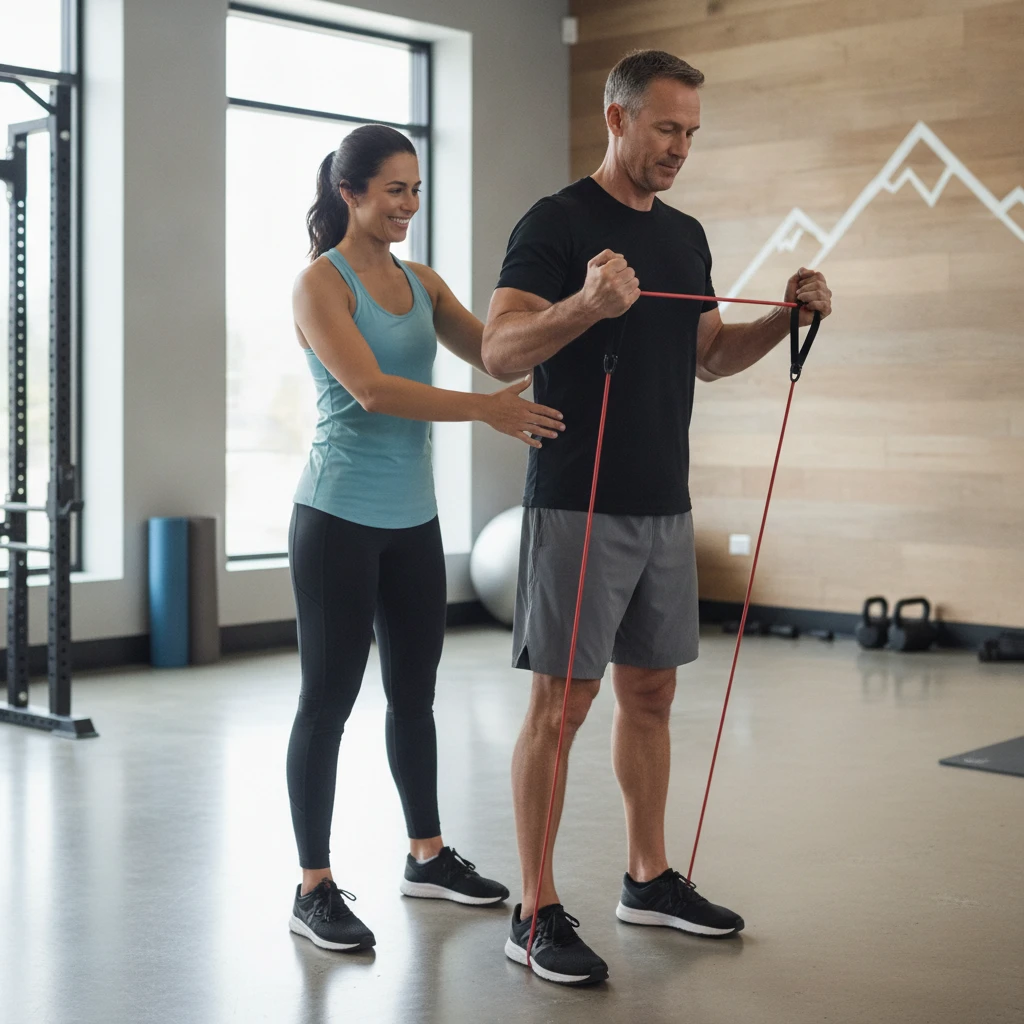
Functional strength training is about building strength that directly translates to improved performance in daily activities and enhanced longevity. For adults aged 30-65, this means moving beyond isolated muscle exercises to focus on compound movements that mimic how the body naturally moves through space. Exercises like squats, lunges, presses, and rows engage multiple muscle groups simultaneously, improving coordination, balance, and overall power. The benefits are profound: increased independence, reduced risk of falls, better posture, and the ability to confidently lift groceries, play with children, or enjoy recreational sports without pain. A common pitfall is prioritizing heavy weights over proper form, which can lead to injury and negate the functional benefits. An actionable step involves focusing on mastering fundamental movement patterns with controlled weights before progressing, ensuring the body can perform these actions safely and efficiently, thereby enhancing joint mobility for long-term adult fitness.
Preventing Age-Related Decline and Injury Risk
Age-related physiological changes, such as sarcopenia (muscle loss) and osteopenia (bone density loss), can significantly impact independence and increase injury risk. Proactive strength and resistance training are the most effective interventions to mitigate these declines. Consistent exercise stimulates muscle protein synthesis and bone remodeling, helping to preserve muscle mass and bone density. Furthermore, incorporating balance and coordination exercises, such as single-leg stands or dynamic balance drills, is essential for reducing the risk of falls, a major concern for older adults. Pitfalls include ignoring early signs of decline or adopting a sedentary lifestyle, which accelerates these processes. Proper warm-ups before exercise and cool-downs afterward are also critical for injury prevention, preparing the body for activity and aiding recovery. For example, a client who consistently performs balance work alongside strength training may experience a noticeable reduction in their perceived risk of falls and improved stability in everyday movements.
Integrating Nutrition for Sustainable Weight Management and Metabolic Health
Understanding Balanced Eating for Energy and Recovery
Optimal nutrition is the cornerstone of sustainable weight management and robust metabolic health, directly influencing energy levels, recovery from exercise, and overall vitality. Balanced eating means consuming an appropriate mix of macronutrients—proteins, carbohydrates, and healthy fats—alongside a rich array of micronutrients from whole foods. Proteins are vital for muscle repair and satiety, complex carbohydrates provide sustained energy, and healthy fats support hormonal balance and nutrient absorption. A common pitfall is falling victim to restrictive diets that eliminate entire food groups, leading to nutrient deficiencies and an unsustainable relationship with food. Instead, the focus should be on creating a plate that is rich in fruits, vegetables, lean proteins, and whole grains, customized to individual energy needs. An actionable step is to begin tracking food intake for a few days to gain awareness of current eating patterns and identify areas for improvement without judgment.
The Role of Personalized Nutrition Coaching in Long-Term Results
While general nutrition guidelines exist, their application to individual circumstances often requires expert interpretation. Personalized nutrition coaching moves beyond generic advice, offering tailored strategies that consider an individual’s unique metabolism, dietary preferences, cultural background, health conditions, and lifestyle demands. This bespoke approach ensures that dietary recommendations are realistic, sustainable, and enjoyable, fostering a positive relationship with food. Unlike short-term diets, coaching emphasizes education and habit formation, empowering clients to make informed food choices independently. Decision criteria for selecting a nutrition coach should include their qualifications in metabolic health and their ability to create flexible plans that adapt to a client’s evolving needs. For example, a client struggling with evening cravings might receive coaching on specific protein-rich snack options or strategies to manage stress eating, leading to far more effective and lasting results than a one-size-fits-all meal plan, thereby World Health Organization.

Accountability and Motivation: The Personal Trainer’s Role in Consistency
Consistent Support and Guidance Beyond the Gym Floor
Maintaining a consistent fitness regimen often proves to be one of the most significant challenges for individuals pursuing long-term health goals. A personal trainer extends support far beyond the confines of a gym session, acting as a crucial anchor for accountability. This involves proactive communication, such as check-ins via text or email, which help clients stay engaged and on track with their nutritional strategies and recovery protocols. Such consistent oversight helps to reinforce positive habits and provides a critical layer of support when motivation wanes. Without this external structure, many individuals find it easy to deviate from their plans, leading to sporadic efforts and ultimately, stalled progress. The trainer becomes a trusted partner, offering both encouragement and gentle redirection to ensure the ongoing adherence necessary for achieving sustained results in Allentown and beyond.
Strategies for Overcoming Plateaus and Maintaining Momentum
Plateaus are an inevitable part of any fitness journey, characterized by a temporary halt in progress despite continued effort. A skilled personal trainer possesses the expertise to identify these stagnation points early and implement strategic adjustments to reignite momentum. This might involve varying exercise modalities, increasing intensity through progressive overload, or introducing entirely new movement patterns to challenge the body differently. For instance, if a client’s strength gains in a specific lift have stalled, an Allentown expert in personalized strength training might incorporate a different rep scheme, add resistance bands, or change the exercise variation. Nutrition also plays a pivotal role; trainers can guide clients on macro-nutrient adjustments or meal timing to support new demands. Effective recovery strategies, including sleep optimization and active recovery, are also critical. The key decision criteria for adjusting a program include consistent measurement, client feedback, and observable performance. By strategically adapting the plan, trainers ensure clients continue to progress, staying motivated through varied challenges rather than succumbing to frustration.
Medical Fitness: Bridging the Gap Between Health and Exercise
Working Safely with Existing Health Conditions and Medical Needs (e.g., GLP-1 Support)
For many adults, fitness journeys intersect with existing health conditions, necessitating a nuanced approach to exercise. Medical fitness programs are specifically designed to bridge this gap, ensuring that workouts are not only effective but also entirely safe. A qualified personal trainer in this domain will work in close consultation with a client’s healthcare providers, obtaining medical clearance and understanding any specific contraindications or limitations. For individuals managing conditions like diabetes, cardiovascular disease, or those utilizing medications such as GLP-1 agonists for weight management, tailored exercise protocols are paramount. The trainer must understand how these medications might affect blood sugar, energy levels, or hydration, adapting the intensity, duration, and type of exercise accordingly. The primary pitfall is ignoring medical advice or attempting generic workouts that could exacerbate conditions. Actionable steps include a thorough initial assessment, continuous monitoring during sessions, and flexible program adjustments based on how the client’s body responds, ensuring a supportive and secure environment for improving health.
Developing Effective Exercise Strategies Post-Rehabilitation
Transitioning from physical therapy or post-injury rehabilitation back to a regular exercise routine can be a daunting process. A medical fitness trainer excels at creating a seamless and progressive bridge from recovery to peak physical function. The goal is not just to prevent re-injury but to build foundational strength and restore full mobility in affected areas. This often involves starting with corrective exercises to address muscle imbalances or weakness, gradually incorporating more functional movements, and then progressing to sport-specific or lifestyle-specific activities. For instance, a client recovering from knee surgery might begin with isometric exercises, advance to bodyweight squats, and eventually incorporate weighted lunges and agility drills, all under expert supervision. The decision criteria for progression include pain levels, range of motion, and demonstrated strength gains. By focusing on gradual overload and proper biomechanics, trainers help individuals regain confidence and capability, ensuring a robust return to an active lifestyle without compromising their recovery.
Advanced Insights: Leveraging Body Composition Analysis for Progress
Moving Beyond the Scale for Meaningful Health Results
Reliance solely on a bathroom scale can be a significant pitfall for individuals pursuing health and fitness goals. The number on the scale often fails to distinguish between fluctuations in muscle mass, fat mass, and even water retention, leading to frustration and misinterpretation of progress. Body composition analysis provides a far more comprehensive and accurate picture of overall health and fitness. By detailing the percentages of lean muscle, body fat, and bone density, it offers invaluable data that empowers both the client and trainer to make informed decisions. For example, a client might experience a slight weight increase due to significant muscle gain and fat loss simultaneously, which would be missed by the scale alone. Understanding these metrics helps to set realistic goals, validate efforts, and maintain motivation, proving that progress is more than just a number. Integrating body composition analysis for targeted strength gains allows for truly meaningful health results.
Understanding Muscle Mass, Fat Loss, and Key Health Markers
Detailed body composition analysis delves into specific metrics that are crucial for understanding and optimizing health. Beyond overall body fat percentage, it highlights visceral fat levels, which is the fat surrounding internal organs and a key indicator of metabolic health risk. Tracking changes in skeletal muscle mass is equally important, as greater muscle mass contributes to a higher metabolic rate, improved strength, and better long-term health, particularly for adults over 30. Bone mineral density can also be assessed, offering insights into bone health, which is vital for preventing osteoporosis. An expert trainer utilizes these markers to fine-tune exercise programming and nutrition strategies. For instance, if a client aims for fat loss, the focus might be on resistance training to preserve muscle while creating a calorie deficit. Conversely, building muscle mass would involve specific strength protocols and protein intake. By understanding these individual components, clients can focus on targeted improvements that lead to sustainable and profound health benefits.
Choosing the Right Support: Personal Training vs. Group Classes or Solo Workouts
When Personalized Coaching Excels for Long-Term Goals
While group classes and solo workouts offer distinct advantages, personalized coaching excels when individuals seek to achieve specific, long-term fitness and health objectives. This is particularly true for adults aged 30-65 who may have unique needs such as managing chronic conditions, recovering from injury, or addressing specific performance goals like improving golf swing mechanics or preparing for a physically demanding hobby. In these scenarios, a generic group class or self-guided workout often falls short because it cannot provide the precision and adaptability required. Personalized coaching ensures that every exercise, every progression, and every nutritional recommendation is directly aligned with the individual’s physiology, lifestyle, and aspirations. Pitfalls of alternative approaches include increased risk of injury due to improper form, lack of engagement when programs aren’t motivating, and slower progress when critical adjustments are missed. Personal training provides a strategic framework where expert guidance becomes the catalyst for sustained success and profound personal transformation.
The Benefits of Individualized Attention and Expert Guidance
The core advantage of personal training lies in the depth of individualized attention and expert guidance provided. Unlike group settings where instructors must cater to the masses, a personal trainer focuses solely on one client, meticulously observing form, assessing movement patterns, and providing immediate, constructive feedback. This one-on-one dynamic ensures exercises are performed correctly, maximizing effectiveness and minimizing injury risk. Furthermore, an expert trainer develops a program that evolves with the client, adapting to their progress, energy levels, and even daily stressors. This bespoke approach fosters a deeper understanding of one’s body and capabilities. Accountability is significantly enhanced, as clients are more likely to adhere to a plan when they have a dedicated professional invested in their success. This level of personalized support and expert insight is invaluable for developing sustainable habits, overcoming plateaus, and achieving health and fitness goals that might otherwise seem unattainable.
What to Look for in a Lifelong Fitness Partner in Allentown
Expertise with Adults 30-65 and Diverse Health Needs
Selecting a personal trainer or fitness partner for lifelong wellness requires a nuanced understanding of adult physiology and diverse health needs, particularly for individuals aged 30 to 65. Generic workout plans, often found in large gyms, frequently overlook critical factors such as joint health, hormonal changes, and metabolic conditions common in this demographic. An ideal partner in Allentown will possess specialized knowledge in creating age-appropriate exercise programs that prioritize sustainability and injury prevention. This includes expertise in adapting routines for pre-existing conditions like arthritis, osteoporosis, or metabolic syndrome, ensuring that every movement contributes positively to long-term health, rather than exacerbating issues.
Consider the pitfalls of a one-size-fits-all approach: a high-intensity program designed for a younger athlete could lead to burnout or injury for someone managing chronic back pain or recovering from a sedentary lifestyle. Instead, seek partners who offer personalized assessments and demonstrate a clear track record in modifying exercises to meet individual capabilities and limitations. For instance, a 55-year-old client with pre-diabetes and limited mobility might require a trainer skilled in
A Holistic Approach to Wellness (Strength, Nutrition, Mobility, Recovery)
True lifelong fitness extends far beyond mere physical exertion; it demands a holistic approach encompassing strength, nutrition, mobility, and recovery. A premier fitness partner understands that these components are interconnected and must be addressed synergistically for optimal health outcomes. Focusing solely on strength training, for example, without adequate attention to nutrition, can limit muscle growth and recovery, impeding progress and overall vitality. Similarly, neglecting mobility and recovery can lead to stiffness, reduced range of motion, and an increased risk of injury, undermining the benefits of other efforts.
When evaluating potential partners, inquire about their comprehensive services. Do they integrate personalized nutrition coaching alongside exercise, helping you make informed dietary choices that support your fitness goals and metabolic health? Do they emphasize mobility drills and recovery strategies, such as foam rolling or stretching, to maintain joint health and accelerate physical rejuvenation? The World Health Organization consistently highlights the importance of integrated physical activity for overall well-being. An effective partner will offer guidance on all these fronts, providing a well-rounded program that empowers you to build strength, manage weight, enhance flexibility, and ensure your body is ready for each new day, fostering a truly sustainable and active lifestyle.
Local Focus and Community Integration in the Lehigh Valley
Choosing a fitness partner with a strong local presence and integration within the Lehigh Valley offers distinct advantages for long-term commitment and support. A local partner in Allentown is not just a service provider; they are part of your community, often understanding the unique lifestyle, challenges, and opportunities specific to residents. This local insight can translate into more relevant advice, such as recommending walking trails in the region or understanding the demands of commuting within the
Begin Your Journey to Lasting Wellness with Forward Thinking Fitness
Connecting with Experts in Strength, Nutrition, and Medical Fitness in Allentown
At Forward Thinking Fitness, we pride ourselves on offering specialized expertise that goes beyond conventional training, connecting you with dedicated professionals in Allentown who are deeply knowledgeable in strength, nutrition, and medical fitness. Our team comprises experts in designing personalized strength training regimens that are specifically tailored for adults aged 30-65, focusing on building sustainable power, endurance, and functional movement patterns. We understand the specific physiological needs of this age group, from enhancing bone density to improving cardiovascular health, ensuring that every session contributes directly to your long-term vitality. Our coaches are committed to providing an unparalleled level of service, adapting programs as your needs evolve.
Beyond the gym floor, our comprehensive approach integrates advanced Allentown experts in personalized strength training and holistic wellness, dedicated to your unique journey.
Taking the First Step Towards a Healthier, More Active Future
Embarking on a journey to lasting wellness might seem daunting, but taking that crucial first step is simpler than you think. At Forward Thinking Fitness, we make it easy to begin your transformation by offering a clear and supportive pathway. Your initial step is to connect with us for a consultation, where we’ll discuss your current health status, fitness history, and most importantly, your long-term goals. This conversation allows us to understand your unique aspirations and any specific challenges you might be facing, ensuring that our partnership is built on a foundation of mutual understanding and personalized attention. We believe in empowering you to make informed decisions about your health, guiding you towards a more active and fulfilling life.
Following your consultation, we will conduct a thorough assessment to establish your baseline fitness level, identify areas for improvement, and craft a truly customized plan that aligns with your objectives. This isn’t about quick fixes or unrealistic promises; it’s about building sustainable lifestyle changes that foster resilience, strength, and overall well-being for years to come. Investing in a personalized fitness partner is an investment in your future health, energy, and quality of life. Let us help you navigate this path with expert guidance, unwavering support, and a commitment to helping you achieve a healthier, more active future. Don’t delay the benefits of proactive health; reach out today to begin your journey.