
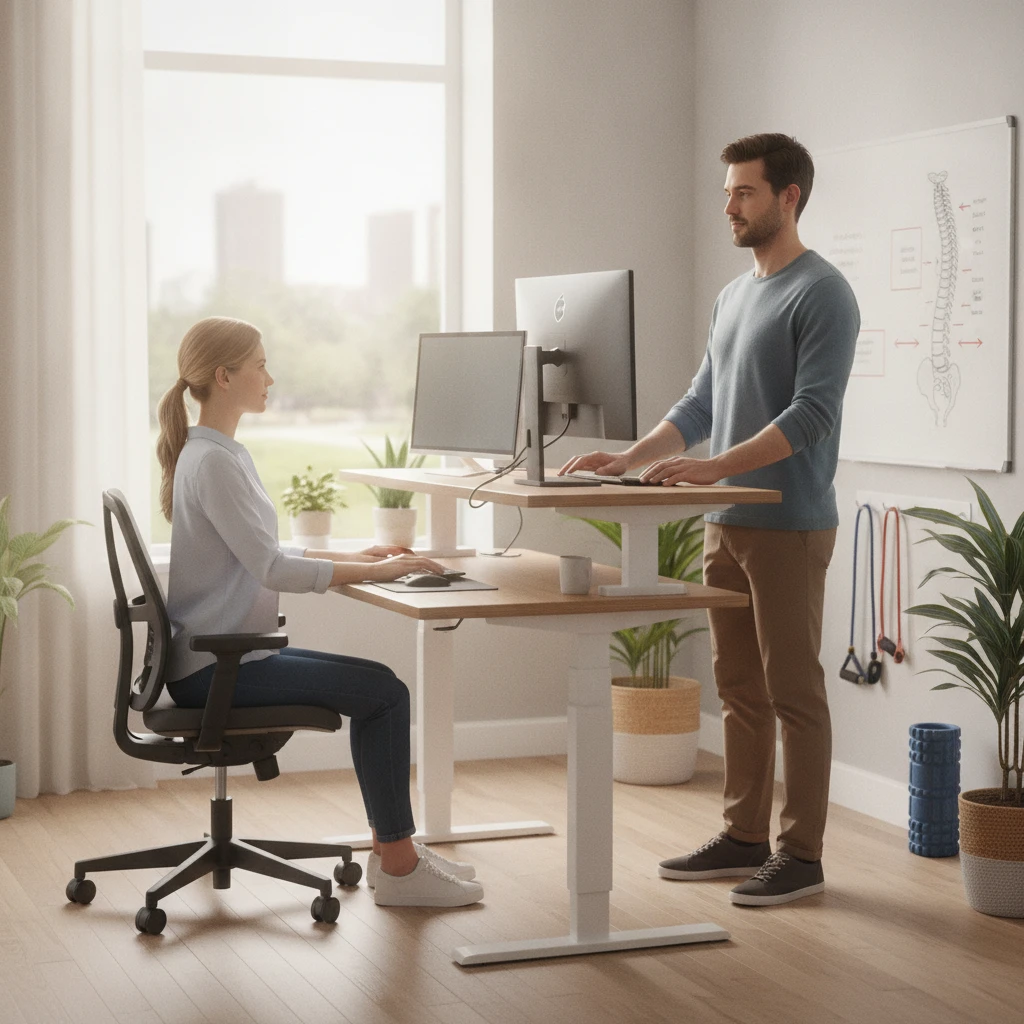
Many adults spend a significant portion of their day seated, often tethered to a desk. While modern work environments offer convenience, they can silently erode your physical well-being, leading to chronic discomfort and reduced vitality. Poor posture, a common byproduct of prolonged sitting, isn’t merely an aesthetic concern; it’s a direct pathway to a cascade of health issues.
Understanding the far-reaching impact of how you hold your body during your workday is the first step toward reclaiming your comfort and long-term health. By recognizing the hidden costs and proactively addressing them, you can transform your desk routine from a source of strain into an opportunity for sustained wellness.
Why Your Desk Job Demands Better Posture (and What It’s Costing You)
Beyond Aesthetics: The Health Implications of Poor Posture
The consequences of poor posture extend far beyond a slumped appearance. Chronically compromised alignment places undue stress on your musculoskeletal system, leading to a host of issues. You might experience persistent back pain, neck stiffness, and headaches, which can significantly reduce your quality of life and productivity. Over time, poor posture can contribute to more serious conditions like disc degeneration, nerve compression, and even altered breathing patterns, impacting your energy levels and overall cardiovascular health. It can also affect your mood and confidence, making you feel less engaged and more fatigued. Addressing these issues early is crucial for maintaining your long-term physical and mental well-being, preventing minor discomforts from escalating into chronic problems that hinder daily activities and even your fitness goals. A holistic approach to health often begins with foundational elements like proper posture.
Common Pain Points for Desk Workers
Desk workers frequently report pain in specific areas due to repetitive strain and static positions. The most common complaints include pain in the neck and shoulders, often stemming from craning forward to view a monitor or holding a phone between the ear and shoulder. The lower back is another prevalent trouble spot, suffering from prolonged sitting that flattens the natural lumbar curve and weakens core muscles. Many also experience wrist and forearm discomfort, or even carpal tunnel syndrome, due to improper keyboard and mouse positioning. Headaches, particularly tension headaches, are also common, originating from tight muscles in the neck and upper back. Recognizing these specific pain points is the first step in identifying areas that require immediate attention and ergonomic adjustments in your workspace to prevent further strain and potential injury. Ignoring these early warning signs can lead to more entrenched and difficult-to-treat conditions.
Your Ergonomic Blueprint: Setting Up Your Workspace for Success
The Ideal Chair and Desk Height
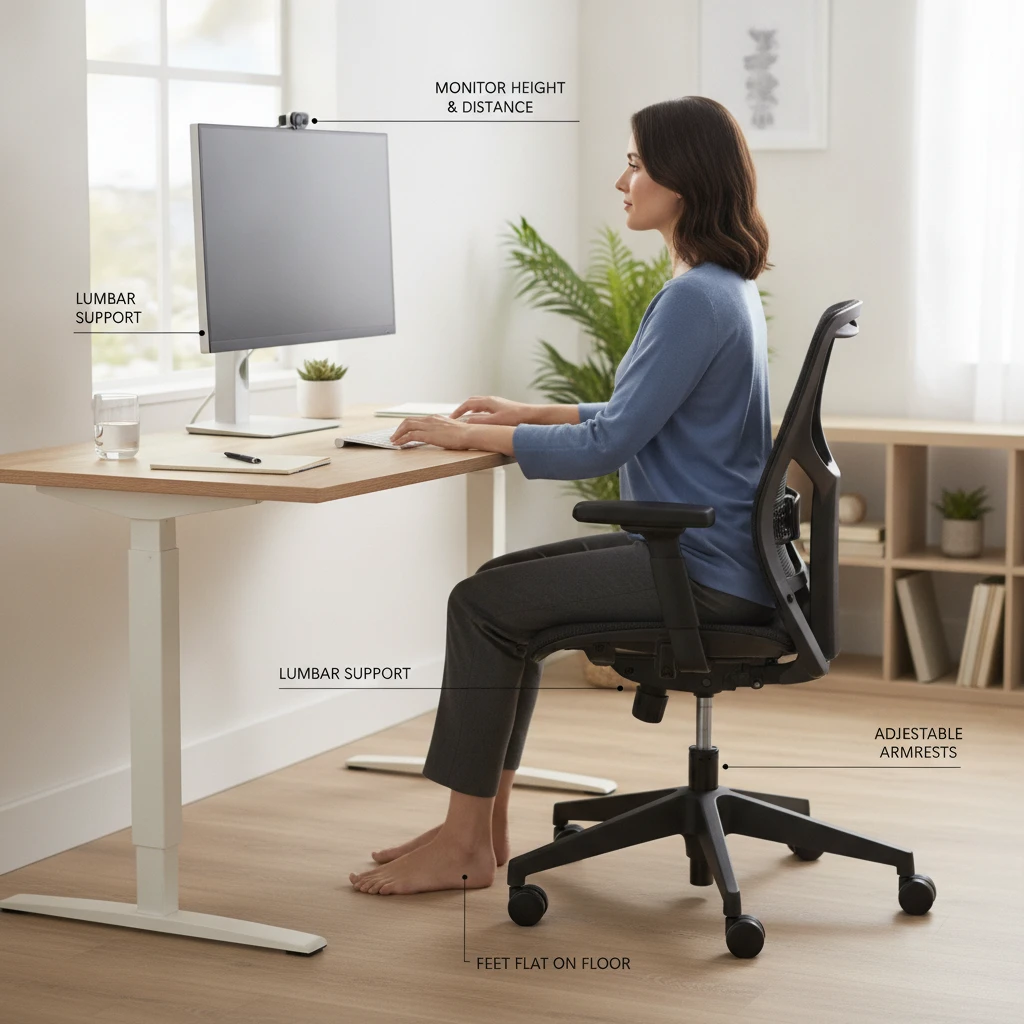
Achieving optimal ergonomics starts with your chair and desk height. Your office chair should support the natural curve of your spine, especially the lumbar region, and allow your feet to be flat on the floor or on a footrest. The height should be adjusted so your hips are slightly higher than your knees, promoting a healthy pelvic tilt. For your desk, the ideal height allows your arms to rest comfortably at a 90-degree angle when typing, with your shoulders relaxed and elbows close to your body. A common pitfall is using a desk that’s too high, forcing you to shrug your shoulders, or too low, causing you to hunch over. Consider a standing desk converter if a fully adjustable desk isn’t an option, allowing you to alternate between sitting and standing throughout the day. This variability is key to preventing static load on your spine and muscles, which contributes significantly to discomfort for adults in the Lehigh Valley and beyond.
Monitor Placement and Keyboard/Mouse Ergonomics
Proper monitor placement is crucial for preventing neck and eye strain. Position your monitor directly in front of you, about an arm’s length away. The top of the screen should be at or slightly below eye level. If you use multiple monitors, ensure your primary screen is centered. For keyboard and mouse ergonomics, keep them close to your body to avoid reaching, which can strain your shoulders and wrists. Your wrists should remain straight and neutral, not bent up or down. A split or ergonomic keyboard and a vertical mouse can further reduce strain, especially if you spend long hours typing. Avoid resting your wrists on a pad while typing; instead, use it as a resting spot during breaks. Regularly assess your setup, as even minor adjustments can make a significant difference in comfort and productivity. A well-configured workspace is an investment in your daily well-being and productivity.
Micro-Movements & Mindful Breaks: Your Daily Antidote to Stiffness
The 20-20-20 Rule and Beyond
The 20-20-20 rule is a simple yet powerful strategy to combat eye strain and physical stiffness. Every 20 minutes, look at something 20 feet away for 20 seconds. This helps relax your eye muscles and encourages a momentary shift in focus. Beyond this, integrate more comprehensive micro-breaks into your day. Set a timer to stand up and move every 30-60 minutes. This doesn’t require a long walk; simply standing, stretching, or walking to get a glass of water can significantly interrupt static posture. These small, consistent movements are far more effective than trying to compensate with a single long workout after a day of immobility. They keep your blood flowing, muscles engaged, and mind refreshed, preventing the gradual buildup of tension that leads to chronic pain. Building these
Upper Back and Chest Openers
Desk work often leads to a rounded upper back and tight chest muscles, contributing to a “hunchback” posture. To counteract this, incorporate effective chest openers and upper back stretches. The “Thoracic Extension over a Foam Roller” is excellent; lie with a foam roller under your mid-back, supporting your head, and gently extend backward over it. If you don’t have a foam roller, simply interlace your fingers behind your head, elbows wide, and gently arch your upper back. Another beneficial stretch is the “Cat-Cow” pose, done on hands and knees, which mobilizes the spine through flexion and extension. For chest opening, stand in a doorway with your forearms on the frame and gently lean forward, feeling the stretch across your chest. These exercises help to restore the natural curvature of your spine and open up the chest, which can dramatically improve your posture and breathing capacity. Regular application of these stretches is a cornerstone of
Hip Flexor and Glute Stretches
Prolonged sitting shortens and tightens your hip flexors while weakening your glutes, leading to lower back pain and reduced mobility. To address this, integrate targeted hip and glute stretches into your routine. The “Kneeling Hip Flexor Stretch” is highly effective: kneel on one knee with the other foot flat on the floor in front of you, then gently push your hips forward until you feel a stretch in the front of your hip. Hold for 20-30 seconds per side. For glutes, the “Figure-Four Stretch” (also known as the seated piriformis stretch) is excellent: sitting, cross one ankle over the opposite knee, then gently lean forward from your hips. If done standing, you can use a chair for balance. Another great option is “Glute Bridges,” lying on your back with knees bent and feet flat, then lifting your hips off the floor, squeezing your glutes at the top. These stretches help restore balance to your pelvic region, improve lower back health, and enhance overall functional movement. Consistent effort in these areas can significantly mitigate the negative impacts of a sedentary lifestyle. For personalized guidance on these and other mobility exercises, consider connecting with a local expert on personal training.
Targeted Stretches to Release Desk-Bound Tension
While the previous sections detailed specific stretches for the upper back, chest, hips, and glutes, the overarching goal is to implement a comprehensive strategy for releasing tension accumulated from prolonged desk work. The key lies in understanding that our bodies are interconnected; tightness in one area often impacts another. Therefore, a truly effective routine involves not just isolated movements but a holistic approach that addresses common problem zones proactively.
To truly combat desk-bound tension, consistency is paramount. Integrating short stretching breaks throughout your workday can be more beneficial than one long session at the end of the day. Consider setting reminders to perform quick neck rotations, shoulder shrugs, wrist circles, or even a standing side bend every hour. These micro-breaks, combined with more structured sessions focusing on areas like the thoracic spine, hip flexors, and glutes, create a powerful defense against chronic pain and postural issues. Remember, the aim is not to achieve extreme flexibility but to restore natural range of motion and alleviate discomfort, empowering you to maintain focus and productivity throughout your day.
Strengthen Your Foundation: Key Muscles for Lasting Posture Improvement
Building a Strong Core for Spinal Support
Improving posture effectively goes beyond simply “sitting up straight”; it requires strengthening the foundational muscles that support your spine. The deep core muscles, including the transverse abdominis, multifidus, and pelvic floor, are critical for achieving lasting spinal stability. Unlike superficial abdominal muscles (like the rectus abdominis, responsible for a “six-pack”), these deep muscles act like a natural corset, providing essential support to your lower back and pelvis. Neglecting them often leads to reliance on less efficient muscle groups, contributing to slouching and lower back pain. A common pitfall is to focus solely on high-repetition crunches, which can actually exacerbate postural issues by over-tightening the front of the body without engaging the true stabilizers.
To effectively build a strong core for posture, focus on exercises that promote controlled, isometric contractions. Actions such as plank variations, bird-dog, and dead bug exercises are excellent for engaging these deeper muscles. When performing these, prioritize proper form and controlled movement over speed or the number of repetitions. For instance, holding a perfect plank for 30-60 seconds with a neutral spine is far more beneficial than struggling through longer durations with poor alignment. Regularly incorporating these exercises into your routine helps create a robust support system for your spine, reducing the strain on ligaments and discs and allowing for a more natural, upright posture throughout your day.
Activating Your Glutes and Upper Back Muscles
Beyond the core, strengthening your gluteal muscles and upper back extensors is paramount for correcting common desk-related postural imbalances. Prolonged sitting often leads to dormant glutes and tight hip flexors, contributing to an anterior pelvic tilt and increased lumbar curvature. Activating your gluteal muscles—specifically the gluteus maximus and medius—helps to stabilize the pelvis and counteract this forward tilt, allowing for better alignment through the hips and spine. Exercises like glute bridges, clam shells, and resistance band walks are effective for waking up these powerful muscles.
Similarly, the upper back muscles, including the rhomboids and lower trapezius, are vital for maintaining proper shoulder and thoracic spine alignment. Many desk-bound individuals develop rounded shoulders and a forward head posture due to weakness in these areas. Strengthening these upper back extensors helps to retract the shoulders and pull the shoulder blades down and back, opening up the chest and preventing excessive hunching. Incorporate exercises such as seated rows, face pulls, and ‘Y’ raises to specifically target these muscles. The key is to feel the muscles working and to ensure controlled, deliberate movements. Regularly engaging these often-neglected muscle groups creates a balanced musculature, directly supporting an improved and sustainable posture.

Breaking Bad Habits: Mindful Posture Throughout Your Day
Self-Assessment: Checking Your Posture in Real-Time
Developing greater postural awareness is the first crucial step in breaking entrenched poor habits. Many adults are simply unaware of their posture until discomfort sets in. Self-assessment involves consciously pausing and observing your body’s alignment throughout the day, rather than waiting for pain cues. A simple yet effective technique is the “wall test”: stand with your heels, glutes, upper back, and the back of your head gently touching a wall. If there’s a large gap at your lower back, it indicates an excessive arch (anterior pelvic tilt); if your head doesn’t reach the wall comfortably, you likely have a forward head posture. Regularly checking your posture in a mirror or even performing a quick mental scan can highlight habitual slouching.
The pitfall here is forgetting to perform these real-time checks or becoming discouraged if you don’t immediately achieve perfect alignment. The goal isn’t instant perfection, but consistent, gentle adjustments. Set a timer for every 30-60 minutes while at your desk, or use visual cues like a sticky note on your monitor or a specific app reminder. Each prompt should serve as an opportunity to gently reset to a more neutral spine position, with shoulders relaxed and back, and your head stacked directly over your shoulders. This consistent practice trains your brain to recognize and correct poor alignment more readily, slowly making good posture a more intuitive habit.
Integrating Posture Cues into Your Routine
Once you’ve developed some awareness, the next step is to integrate practical postural cues into your daily routine using a technique known as “habit stacking.” This involves attaching a new desired action (checking your posture) to an existing, established habit. For example, every time you stand up to get water, consciously reset your posture. Or, when your phone rings, take a moment to adjust your sitting position. These small, frequent reminders build muscle memory and reinforce better habits without requiring significant mental effort or willpower each time.
Examples of effective posture cues include “shoulders down and back,” “imagine a string pulling your head towards the ceiling,” or “engage your core gently.” You can also use environmental triggers; for instance, every time you open a new browser tab, take a deep breath and check your alignment. A common pitfall is trying to maintain perfect posture rigidly, which can lead to tension and fatigue. Instead, aim for a relaxed, natural uprightness that feels sustainable. Over time, these consistent applications of small, mindful adjustments will retrain your body’s proprioception and make healthy posture feel like the default, rather than an effort. For more on building such lasting changes, consider exploring strategies for
The decision criterion here is sustainability. It’s not about intense, grueling workouts every day, but consistent, moderate activity. A common pitfall is believing that if you can’t commit to a full gym session, any movement is pointless. This is far from the truth. Even 5-10 minutes of light walking every hour can make a profound difference in reducing stiffness and improving overall mobility. The World Health Organization recommends at least 150 minutes of moderate-intensity aerobic activity per week for adults, which can easily be achieved through daily walks and other light activities. This not only benefits your posture but also contributes to overall physical and mental well-being, directly impacting your ability to maintain good alignment.
Finding a Movement Practice You Enjoy
Sustainable fitness is intrinsically linked to enjoyment. If you dread your workout, it’s unlikely to become a regular part of your routine. Exploring different types of movement is key to finding a practice that resonates with you and complements your posture goals. While strength training is excellent for muscle building, other activities like yoga, Pilates, swimming, or dancing offer unique benefits for posture. Yoga and Pilates, for example, heavily emphasize core strength, flexibility, and body awareness, directly addressing many postural imbalances. Swimming provides a low-impact, full-body workout that strengthens the back and shoulders without putting excessive strain on the spine.
A common pitfall is sticking to a rigid exercise regimen that doesn’t align with your personal preferences or lifestyle. Instead, view movement as an opportunity for exploration. Try different classes, engage in outdoor activities, or even seek out a workout buddy to make exercise more enjoyable and accountable. The goal is to cultivate a diverse movement practice that keeps your body strong, flexible, and balanced. When you genuinely enjoy what you’re doing, you’re far more likely to remain consistent, leading to long-term postural improvements and a healthier, more active lifestyle. Your chosen activity should feel like a natural extension of your day, not a chore.
When to Seek Professional Guidance: Getting Personalized Support
Identifying Persistent Pain or Numbness
While many postural issues can be alleviated through self-care and lifestyle adjustments, it’s crucial to recognize when to seek professional medical guidance. Persistent pain, especially in the neck, shoulders, or lower back, that doesn’t improve with self-care or worsens over time, is a significant red flag. This includes pain that radiates down your arms or legs, which could indicate nerve involvement. Other serious symptoms include numbness, tingling, or muscle weakness in your extremities. These neurological symptoms suggest that a nerve might be compressed or irritated, potentially due to a herniated disc, spinal stenosis, or other more serious underlying conditions.
The pitfall of ignoring these symptoms is delaying diagnosis and treatment, which can lead to more chronic issues or increased severity. If you experience any of these red flags, or if your pain significantly impacts your daily activities, sleep, or work performance, consult a healthcare professional. This could be your primary care physician, a physical therapist, or a specialist like an orthopedist. They can conduct a thorough examination, including imaging if necessary, to accurately diagnose the cause of your symptoms and recommend an appropriate course of action. Early intervention is often key to preventing further complications and achieving a more effective recovery.
How a Personal Trainer or Medical Fitness Coach Can Help in the Lehigh Valley
Once any underlying medical conditions have been addressed by a doctor, or if your discomfort is solely due to muscular imbalances and poor habits, a personal trainer or medical fitness coach can provide invaluable, personalized support. In the Lehigh Valley, professionals at places like Forward Thinking Fitness offer tailored programs specifically designed to address individual postural challenges. A qualified trainer can assess your movement patterns, identify specific muscle weaknesses or tightness contributing to your posture, and create a safe and effective exercise plan. This might include targeted strength training, mobility work, and flexibility exercises to correct imbalances and reinforce proper movement mechanics.
For those with more complex health needs or recovering from injuries, a medical fitness coach offers an even higher level of specialized guidance. They often work in conjunction with healthcare providers, understanding medical conditions and their implications for exercise. This ensures that your fitness regimen is not only effective for posture but also safe and therapeutic, avoiding exacerbation of existing issues. Their expertise provides a critical layer of safety and customization that generic online programs simply cannot match. Investing in personalized fitness coaching can accelerate your progress, provide accountability, and instill the correct habits to maintain a healthy, pain-free posture for the long term. For more insights into this tailored approach, read about how a personal trainer personalizes your fitness goals.
Beyond the Desk: Incorporating Movement into Your Lifestyle
While proper ergonomics at your workstation are crucial, maintaining good posture extends far beyond the confines of your desk. Modern life often involves extended periods of sedentary behavior, whether driving, watching television, or engaging in hobbies that require sitting. To truly combat postural issues and promote overall well-being, it’s essential to integrate movement actively into your entire day.
Simple habits can make a significant difference. Try setting a timer to take short breaks every 30-60 minutes to stand, stretch, or walk around. Consider using a standing desk or incorporating standing meetings when possible. When engaging in household chores or hobbies, pay attention to your body mechanics: bend from your knees and hips rather than your back when lifting, and maintain a neutral spine during tasks like gardening or cooking. Regular physical activity, such as walking, cycling, or swimming, also plays a vital role in strengthening core muscles, improving flexibility, and promoting circulation, all of which support healthy posture.
Developing a mindful approach to how you move throughout the day, not just during dedicated exercise, is key to sustainable postural health. It’s about creating a lifestyle where movement is natural and integrated, rather than an afterthought. This holistic approach, combined with targeted exercises and professional guidance when needed, provides the best defense against the aches and pains associated with poor posture.
Your Posture Improvement Action Plan: A Daily Checklist
Quick Wins for Immediate Relief
Beginning your journey to better posture doesn’t require drastic changes overnight. Focus on implementing quick, actionable steps that can provide immediate relief and build awareness throughout your workday. Start by performing a quick mental scan of your body every 30-60 minutes: Are your shoulders hunched? Is your head pushed forward? Gently adjust to align your ears over your shoulders, and your shoulders over your hips. Another instant improvement comes from your desk setup. Ensure your monitor is at eye level, your feet are flat on the floor or a footrest, and your elbows are at a 90-degree angle. These small adjustments prevent excessive strain on your neck and back. Consider setting a timer for micro-breaks every 20-30 minutes, even if it’s just to stand up, stretch your arms overhead, and take a few deep breaths. This not only disrupts prolonged sitting but also boosts circulation and reduces muscle stiffness. The key here is conscious awareness and consistent micro-adjustments throughout your day, rather than waiting until pain sets in.
Long-Term Strategies for Sustainable Change
While quick fixes offer relief, true posture correction demands a commitment to long-term strategies and foundational strength. One crucial step is investing in an ergonomic assessment of your workspace, often provided by employers or specialized consultants, to ensure your setup supports optimal spinal alignment. The Occupational Safety and Health Administration (OSHA) offers comprehensive guidelines for optimizing computer workstations, which can be a valuable resource. Beyond the desk, integrating a targeted strength training program is paramount. Focus on strengthening your core, back muscles (like the rhomboids and lower traps), and glutes, as these muscle groups are vital for supporting an upright posture. Exercises such as rows, planks, and glute bridges can significantly improve your muscular endurance and stability. Consistency is more important than intensity initially; even 15-20 minutes of targeted exercise a few times a week can yield substantial benefits. Consider working with a professional who can help lasting healthy habits.
By integrating these actionable steps and long-term strategies into your daily routine, you can significantly improve your posture, reduce pain, and enhance your overall well-being as a desk-bound adult. Remember, consistency and awareness are your most powerful tools on this path to a healthier, pain-free posture.
FAQs About Posture and Desk Pain
Here are some frequently asked questions regarding posture and common desk-related discomforts, along with expert insights to help you better understand and manage your well-being.
How long does it take to correct posture?
Correcting posture isn’t an overnight fix; it’s a gradual process that varies from person to person. Minor improvements can be seen within a few weeks with consistent effort, but significant, lasting change typically takes several months of dedicated exercise, ergonomic adjustments, and mindful awareness. The key is consistency and patience.
Can bad posture cause headaches?
Yes, absolutely. Poor posture, particularly forward head posture or rounded shoulders, can put significant strain on the muscles in your neck, upper back, and shoulders. This tension can lead to muscle spasms and nerve irritation, often resulting in tension headaches or even cervicogenic headaches that originate from the neck. Addressing your posture can often alleviate these types of headaches.
What are the most common posture mistakes at a desk?
Several common mistakes contribute to poor desk posture. These include slouching or rounding the shoulders, forward head posture (often seen when looking down at screens), inadequate lumbar support leading to a slouched lower back, dangling feet, and improperly positioned monitors (too high, too low, or too far away). Being aware of these can help you make targeted corrections.
Is it too late to fix my posture?
It’s almost never too late to improve your posture! While long-standing habits might take more consistent effort to reverse, the human body is remarkably adaptable. Even minor adjustments can lead to significant reductions in pain and improvements in comfort. Starting with small, sustainable changes and gradually building up your core and back strength can yield positive results at any age. Consult a healthcare professional or physical therapist for personalized guidance, especially if you experience chronic pain.